
Wildebeest Migration
The Ultimate Natural Spectacle
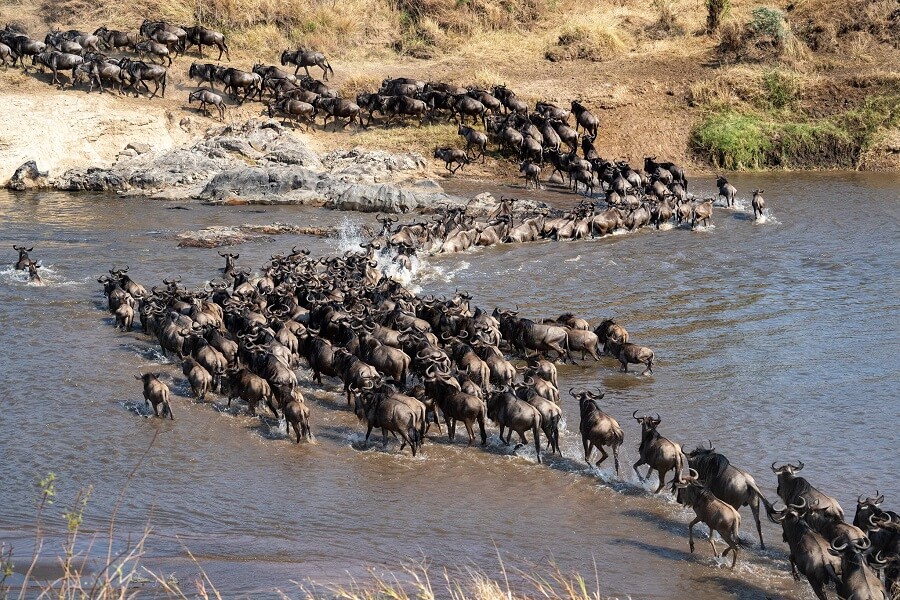
The Great Wildebeest Migration is Africa’s most iconic wildlife phenomenon, unfolding across the vast Serengeti – Mara ecosystem of Tanzania and Kenya. More than 1.5 million wildebeest, accompanied by immense herds of zebras and gazelles, move in an endless natural cycle guided by seasonal rains, fresh grazing, and survival instincts creating one of the most powerful and unforgettable safari experiences on Earth.
What Causes the Migration
The migration is entirely natural and rain-driven. As grasses dry out in one area, the herds move toward regions that have received recent rainfall. This constant search for grazing and water creates a year-round cycle rather than a single event.
Annual Migration Cycle (Month by Month)
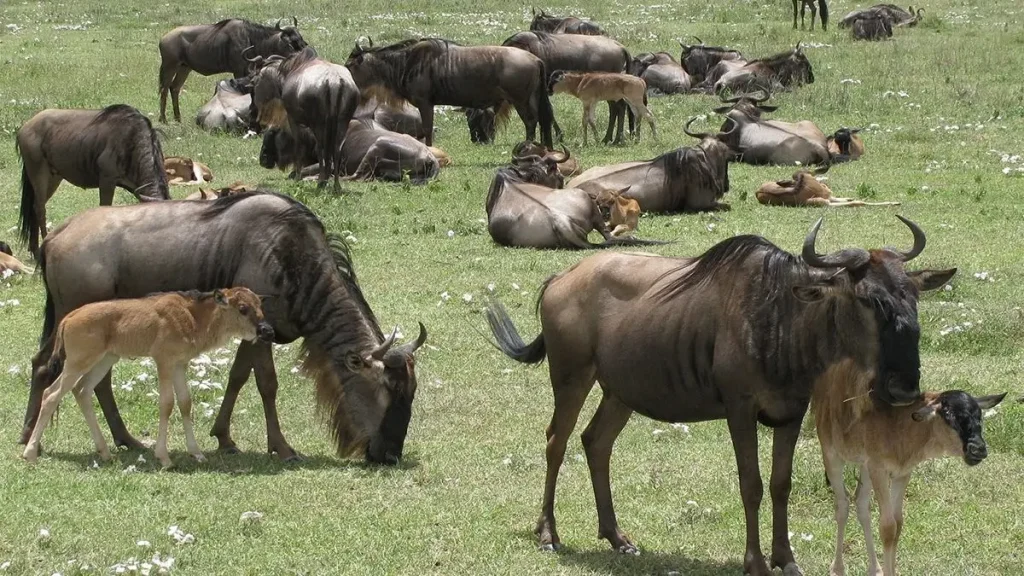
January – March | Southern Serengeti (Calving Season)
- Herds gather on the nutrient-rich short-grass plains of Ndutu and southern Serengeti
- Around 500,000 calves are born within a few weeks
- Excellent predator action with lions, cheetahs, and hyenas
- Best time for photography and witnessing newborn wildlife
April – May | Central & Western Serengeti (Movement North)
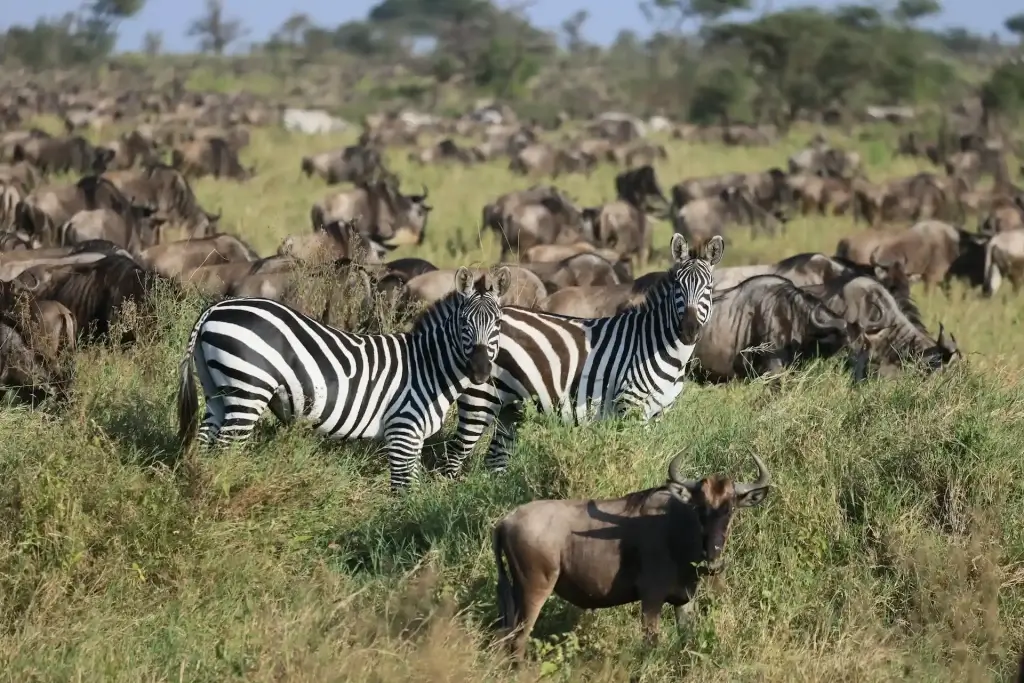
- Long rains begin
- Herds move northwest through Seronera toward the Western Corridor
- Dramatic long columns of migrating animals
- Fewer crowds, lush landscapes
June – July | Western Serengeti (Grumeti River)
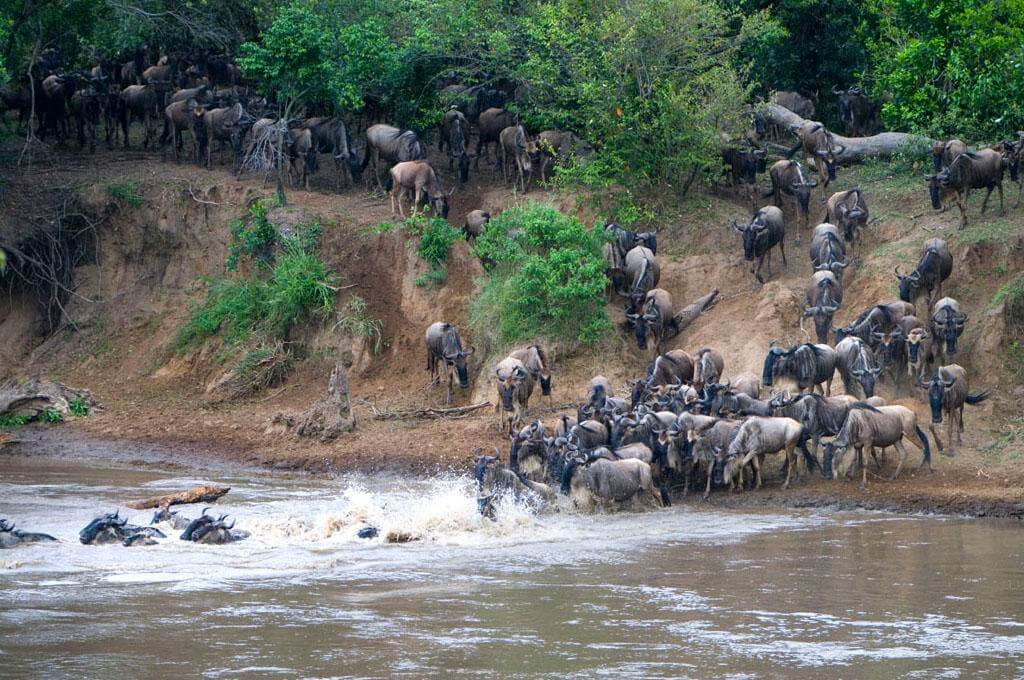
- First major river crossings at the Grumeti River
- Crocodile encounters and tense crossing moments
- Start of the dry season
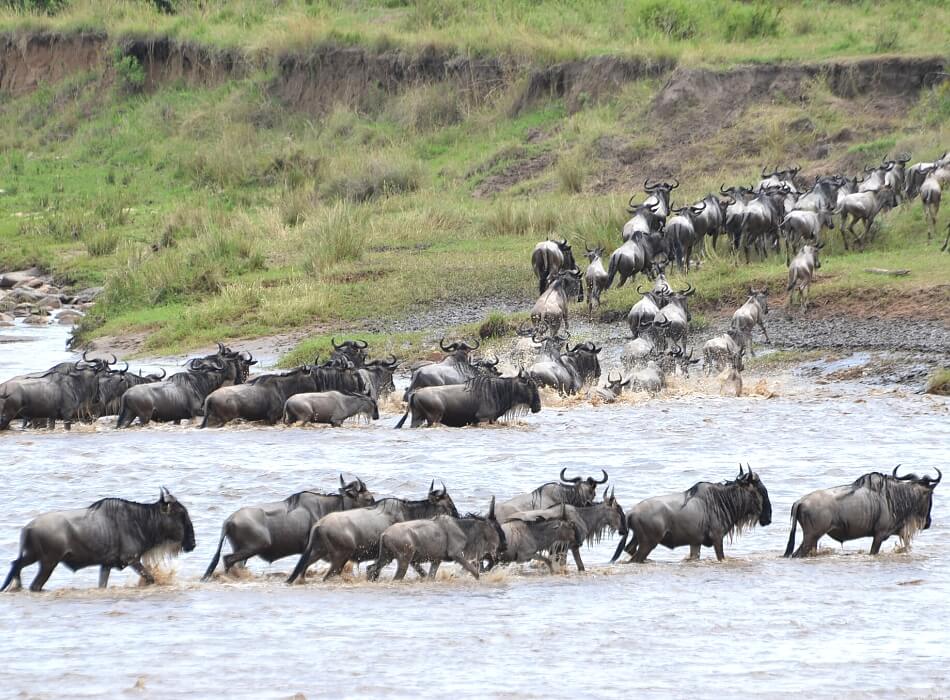
July – October | Northern Serengeti & Maasai Mara (Mara River Crossings)
- Most famous phase of the migration
- Large herds cross the Mara River, facing strong currents and crocodiles
- Crossings are unpredictable and may happen multiple times
- Peak safari season
November – December | Return South
- Short rains fall in the southern Serengeti
- Herds move back toward Ndutu and the short-grass plains
- Quieter period with excellent grazing scenes
Key Locations to Witness the Migration
- Southern Serengeti & Ndutu – calving season
- Central Serengeti (Seronera) – migration in transit
- Western Serengeti (Grumeti River) – early river crossings
- Northern Serengeti (Mara River) – dramatic river crossings
- Maasai Mara, Kenya – extended grazing during peak dry months
Animals Involved
- Wildebeest (blue wildebeest)
- Plains zebras
- Thomson’s and Grant’s gazelles
- Predators: lions, leopards, cheetahs, hyenas, crocodiles
Best Time to See the Migration
The Great Wildebeest Migration is a year-round spectacle, but the experience changes with the seasons, offering unique highlights at different times of the year. January to March is the dramatic calving season on the southern Serengeti plains, where thousands of newborn wildebeest attract predators such as lions, cheetahs, and hyenas perfect for witnessing nature’s raw cycles of life and survival.
April to May brings fewer crowds and lush, green landscapes as the herds move northwest, providing a quieter, more intimate safari experience. July to September is the peak period for the iconic river crossings at the Grumeti and Mara rivers, where large herds face powerful currents and crocodile-infested waters, creating some of the most breathtaking wildlife moments on the planet.
By November, the herds begin returning south toward the nutrient-rich southern Serengeti, offering a colorful, less crowded landscape and excellent photographic opportunities.
Additional Tips:
Flexibility is key: Migration movements are influenced by rainfall, so exact timings can vary.
Choose strategic locations: Staying near key crossing points or calving areas increases your chances of witnessing the most dramatic events.
Combine experiences: Pair game drives with hot air balloon safaris or guided walking safaris for a truly immersive encounter.
Safari Activities During the Wildebeest Migration
Experiencing the Great Wildebeest Migration is more than just watching wildlife it’s about immersing yourself in Africa’s most extraordinary natural spectacle. Game drives are the primary way to follow the herds, offering close encounters with wildebeest, zebras, and predators in their natural habitat. For a unique perspective, hot air balloon safaris float silently over the plains at sunrise, providing breathtaking aerial views of the migrating herds and the sweeping Serengeti landscape.
Photographic safaris allow enthusiasts to capture the dramatic river crossings, predator-prey interactions, and vast plains, while walking safaris in select areas bring you closer to the smaller details of the ecosystem tracking wildlife, learning about plants, and experiencing the sounds and scents of the savannah firsthand. Each activity offers a different way to witness the migration, ensuring an unforgettable safari adventure.
Why the Wildebeest Migration Is Truly Special
The Great Wildebeest Migration is not just a wildlife event it is the largest land mammal migration on Earth, showcasing the scale and power of nature like nowhere else. This extraordinary journey has been occurring continuously for thousands of years, following an ancient, unbroken natural cycle that highlights the resilience of life on the plains.
The migration is also a stage for intense predator – prey interactions, offering rare opportunities to witness lions, cheetahs, and crocodiles in action. Beyond the drama, the migration reveals ever-changing landscapes and wildlife behaviors, from lush green plains and calving herds to dusty dry-season crossings, making each safari experience unique and unforgettable.
Travel Tips for Experiencing the Wildebeest Migration
Planning a safari to witness the Great Wildebeest Migration requires some preparation to make the most of this natural spectacle. Timing is flexible the herds move according to rainfall, so sightings cannot be guaranteed on exact dates. Choosing lodges or camps strategically those that relocate seasonally or are situated near key crossing points can significantly increase your chances of seeing the most dramatic events.
Booking early, especially for peak river-crossing months from July to September, ensures the best accommodations and access to prime viewing locations. Finally, a knowledgeable guide is essential, as their expertise in tracking the herds and understanding wildlife behavior can transform your safari into a truly unforgettable experience.
for more Information
If you have any question please write us to info@activetanzania.com or call us/ WhatsApp +255 682 675 792 or +255 784 605 785. We will be happy to hear from you.
- Safari Destinations

- Arusha National Park
- Lake Manyara National Park
- Tarangire National Park
- Ngorongoro Conservation Area
- Serengeti National Park
- Lake Natron & Ol Doinyo Lengai
- Mkomazi National Park
- Mikumi National Park
- Ruaha National Park
- Nyerere Game Reserve
- Katavi National Park
- Saadani National Park
- Gombe Stream National Park
- Mahale Mountains National Park
- Safari Ittineraries
- 14 Days Safari at the Northern Circuit of Tanzania
- 7 Days Safari at the Northern Circuit of Tanzania
- 6 Days Safari at the Northern Circuit of Tanzania
- 5 Days Safari at the Northern Circuit of Tanzania
- 4 Days Safari at the Northern Circuit of Tanzania
- 8 Days Wildlife & Cycling Safari
- 9 Days Chimpanzee Safari
- 5 Days Chimpanzee Safari
- Travel Tips